

v0 by Vercel
Full stack vibe coding platform. Created by Vercel.
What is v0 by Vercel?
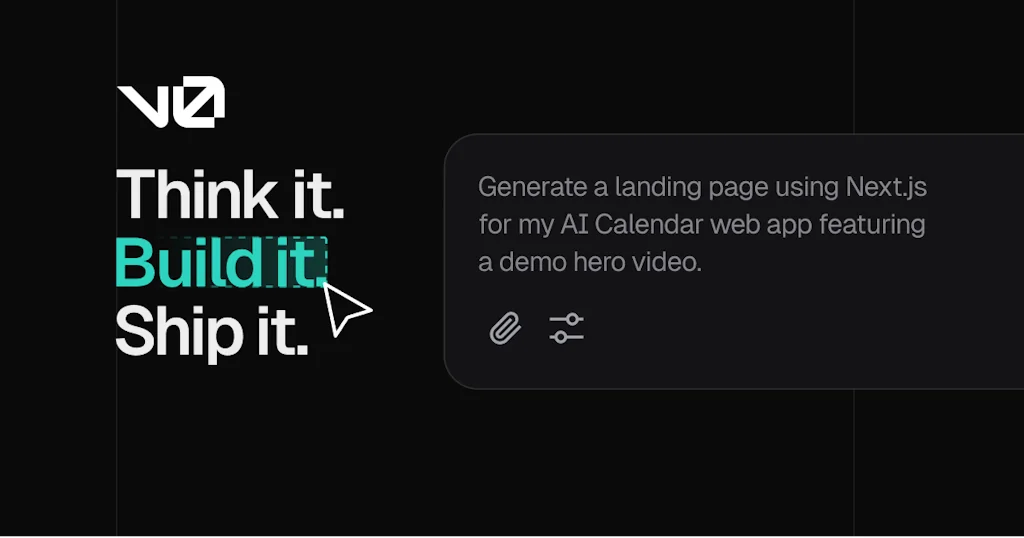
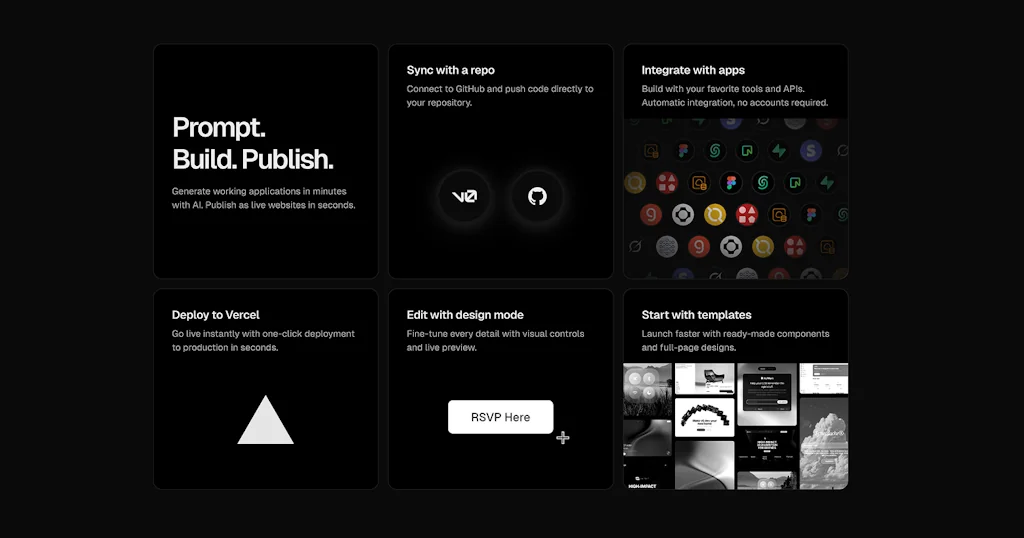
Your collaborative AI assistant to design, iterate, and scale full-stack applications for the web.
Pros & Cons
Pros
- Prototyping
- Fast UI generation
- AI-powered UI generation
- Production-ready code
- Clean code output
- React and Tailwind support
- Time to market reduction
- Design system integration
- Easy to use
- High-quality output
- UI design assistance
Cons
- Not suitable for full production
- Assumes user input
- Buggy
- CSS issues in NextJS
- Local setup issues
- Unreliable affiliate program
Tool Details
| Categories | Engineering & Development, AI Coding Agents, Vibe Coding Tools |
|---|---|
| Website | v0.link |
| Added | September 14, 2023 |
| Platforms | Web |
| Social |
Recent Reviews (12)
We use v0 as our frontend companion to generate .tsx files, and then we use SmythOS agents to integrate those designs with our existing code & APIs. In some cases we instead use Cursor to do the integration, and SmythOS to provide the API functionality. In 2025, our goal is to not have any front-end developers anymore, and stop designing product UX in Figma all together. Instead, the product person who has both user data and product experience, is able to imagine the user interfaces, while our AI agents put everything together.
I have found that this is far and away the best llm to use for building nextjs sites with shadcn ui components. That combo (next/shad) seems to be the default approach it takes to most prompts. It also is super helpful to have the ui render for some quick tweaks and that this model appears to be trained on latest next docs so it can approach things like client/server component design more effectively than (i feel) the latest openai/anthropic models can.
I still use Lovable sometimes and probably more since they connected Supabase, this just make setting up my database way too easy. That's the feature that keeps me split.
Vercel v0 is great for spinning up clean Tailwind/Next.js UI scaffolds from a prompt or screenshot. You get fast iterations and decent component structure. Where it struggles is multi-step flows, state management, data wiring, and design fidelity. It often misses requirements, so you still refactor and rewrite. The latest model pricing feels steep given the miss rate and retries, which makes ROI shaky for daily use. Compared to general coding tools like Cursor or Claude Code, v0 shines mainly as a design-to-UI starter, not an end-to-end builder. Wish list: lower-cost tier for heavy iteration, better memory of prior feedback, spec-aware generation, and fewer regressions between runs. Verdict: useful for quick UI drafts; hard to justify at current price-to-accuracy.
v0.dev is useful for quickly generating UI code, especially for prototyping. The output is mostly clean, though sometimes it needs editing to match exact needs. It works well with modern stacks like React and Tailwind. That said, it can be buggy at times, and local setup isn't always smooth. It's a helpful starting point, but not something I'd rely on for full production work just yet.
Good enough to get a good idea for the UX but the generated code is not directly usable in the NextJS project. The CSS breaks and some components do not reflect the same styles as shown in the generated website. Good for ideation and visualization though
I am a frontend dev with 15 years of experience, worked since IE5 and all seen the rise and fall of backbone, knockout, jQuery. I think v0.dev will finally show me out of office real soon. This is the one app that generates production grade quality code.
This is kind of my go to tool for prototyping even If I end up not using the final result at the end. The design inspiration and really the quick prototyping is a life saver when comes to building quick demo/prototypes.
Amazing tool for frontend. The quality is production grade. I struggled with other tools and silly coding mistake. V0 didn't do 1 coding mistake. At times assumed things but that's on me because I didn't prompt it right.
Frequently Asked Questions about v0 by Vercel
When did v0 by Vercel become popular?
v0 by Vercel became popular around September 14, 2023.
What are the main advantages of using v0 by Vercel?
The top advantages of v0 by Vercel include: prototyping, fast UI generation, AI-powered UI generation, production-ready code, clean code output.
What are the disadvantages of v0 by Vercel?
Some reported disadvantages of v0 by Vercel include: not suitable for full production, assumes user input, buggy, CSS issues in NextJS, local setup issues.
What is v0 by Vercel's overall user rating?
v0 by Vercel has an overall rating of 4.8/5 based on 51 user reviews.
What type of tool is v0 by Vercel?
v0 by Vercel belongs to the following categories: Engineering & Development, AI Coding Agents, Vibe Coding Tools.
Related Engineering & Development Tools

React Flow
React library for building node-based editors and graphs

Hypertune
Type-safe feature flags. Optimized for React and Next.js.

Insquad
Hire senior remote developers in one click

Prism
Competitive benchmarks for developer productivity

Pluralsight
World's largest tech & creative training library

Archfy
Simple Way to Visualize Architecture of Your Product
Related AI Coding Agents Tools

MightyMeld for Tailwind
Style your React app so fast

Faltah Interview Simulator
Get ready to pass your next interview!

Thinkful
Take your place in the #WorldsNextWorkforce.

Cursor
The AI Code Editor

Prettysmart.co
An AI based graphic designer and content writer.

Gitmore
The first AI-powered reporting tool for git repositories
Related Vibe Coding Tools Tools

nCompass
Debug your system's performance 10x faster

FlowLens
Bug reports built for coding agents, so you can ship faster.

Lovable
The world's first AI Fullstack Engineer

yolog.dev Desktop
Never lose a vibe coding session. Archive, replay, search.

Blink.new
The #1 Full Stack Agentic Vibe Coding Platform.

Replit
Idea to app, fast.
Compare v0 by Vercel :





Don't Get Fooled by Fake Social Media Videos
The world's first fact checker for social media. Paste any link and get an instant credibility score with sources.
Try FactCheckTool Free