
Deepfakes in 2026: How to Spot Fake Videos Before You Share Them
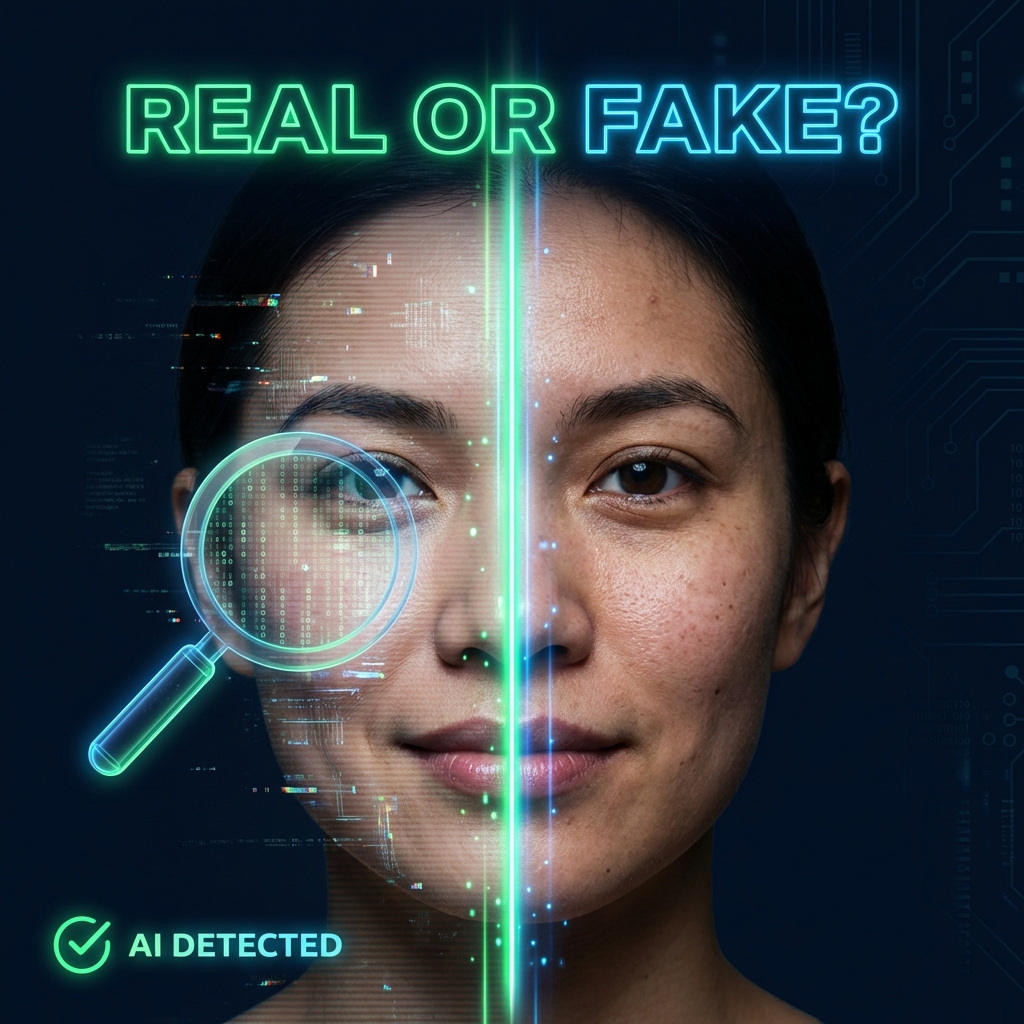
Deepfakes have gone from a niche curiosity to a mainstream threat. In 2025 alone, the number of deepfake videos online jumped to an estimated 8 million — a nearly 900% annual increase. Voice cloning has crossed what researchers call the "indistinguishable threshold": a few seconds of audio is now enough to generate a convincing clone. Here's how to protect yourself before you share something fake.
Source: Fortune, Dec 2025
1) Watch the eyes carefully
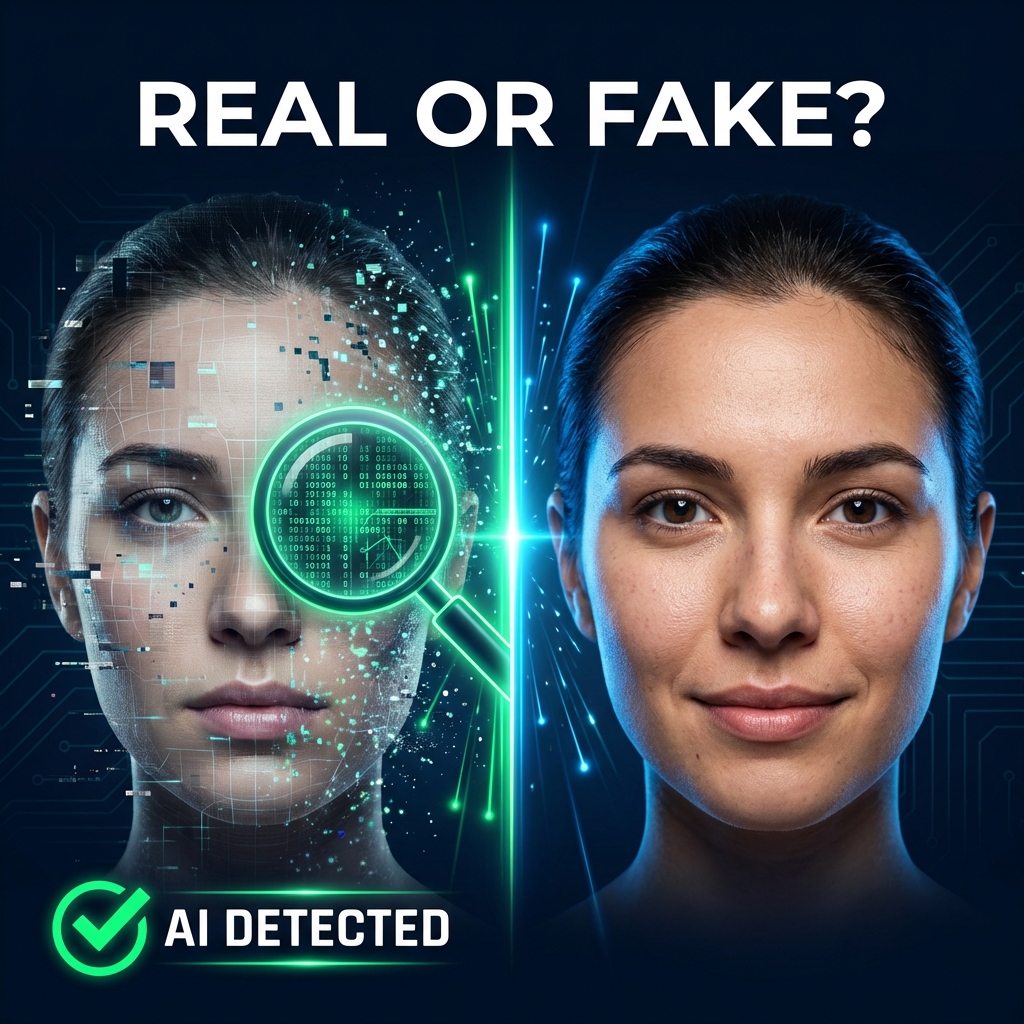
This remains one of the most reliable tells, even with improved AI models. Real humans blink spontaneously every 2–10 seconds. Deepfake faces often stare without blinking for unnaturally long periods. When they do blink, it looks mechanical — missing the subtle muscle movements around the eyes.
- Unnatural stare: AI faces may hold eye contact too steadily, without the micro-movements real eyes make.
- Mechanical blinks: Watch for blinks that look "pasted on" rather than organic.
- Pupil inconsistency: Both pupils should reflect the same light. If they don't, it's a red flag.
2) Ask them to turn their head (if live)
Most deepfake models train primarily on front-facing data. When a synthetic face rotates to a full profile, the rendering breaks down — the ear might blur, the jawline detaches from the neck, or glasses melt into skin.
- Profile glitches: Side angles often reveal warping or blurring around ears and jawline.
- Hair boundaries: The transition between hair and background often flickers or bleeds.
- Accessories: Glasses, earrings, and hats are difficult for AI to render consistently during movement.
3) Listen for audio red flags
Voice cloning has improved dramatically, but there are still things to listen for:
- Breathing patterns: AI audio often inserts breath sounds at wrong moments or loops identical breath sounds.
- Lip sync on "B" and "P" sounds: Bilabial sounds (like "b" and "p") require the lips to close completely. If the lips don't fully close on these sounds, the video is likely fake.
- Environmental mismatch: If someone is speaking outdoors but the audio sounds studio-clean with no wind or ambient noise, that's suspicious.
- Flat emotion: Cloned voices sometimes miss emotional shifts — laughing, sighing, or trailing off mid-sentence.
4) Check skin and lighting inconsistencies
- Too-perfect skin: Deepfakes often produce strangely uniform skin, lacking natural variation from wrinkles, freckles, sunspots, moles, or scars.
- Shadow direction: Light should come from a consistent direction. If the shadow on the nose points one way and the shadow under the chin points another, something is off.
- Facial hair: AI can add or remove a mustache or beard, but often fails to make it look fully natural — especially where it meets skin.
- Skin tone edges: Look where the face meets the neck or ears. Color mismatches or sharp tone changes are a common artifact.
5) See it in action: spotting deepfakes
This video from MIT walks through real examples of how deepfake detection works in practice:
Video: Overview of deepfake detection methods and real-world examples.
6) Use detection tools (but don't rely on them alone)
Several tools can help flag suspicious content, but none of them are foolproof. The most reliable approach is combining tool output with careful human judgment.
- Reverse image/video search: Use TinEye or Google Image Search to track down the original version. If a similar video exists elsewhere with different content, you've likely spotted a fake.
- C2PA provenance: Look for content signed with the Coalition for Content Provenance and Authenticity standard — a cryptographic proof of where media originated.
- FactCheckTool: Paste a suspicious social media link and get a credibility analysis backed by sources, not guesswork.
7) The 60-second rule before sharing
Before you hit share on a shocking video, take 60 seconds to run through this checklist:
- Source: Who posted this? Is it a verified account or an unknown page? How old is the account?
- Context: Does the video match the claimed date, location, and event? Search for the same event from other angles or sources.
- Visual check: Pause the video. Look at the eyes, skin, lighting, and edges. Anything feel off?
- Audio check: Close your eyes and just listen. Does the voice sound natural? Do the emotions match?
- Cross-reference: Search the claim (not the headline) on a neutral search engine. Are credible outlets reporting the same thing?
This works whether the content is a deepfake, a misleading edit, or an out-of-context clip. The goal is the same: verify before you amplify.
8) Why this matters more than ever
Deepfakes aren't just a tech curiosity anymore. They've been used for:
- Political manipulation during elections
- Financial scams (CEO voice clones requesting wire transfers)
- Harassment and non-consensual content
- Fake celebrity endorsements for crypto and investment fraud
The old advice — "look for weird teeth" or "check if the lighting is off" — no longer works. Modern AI models have solved most of those obvious problems. What still works is a combination of careful observation, detection tools, and source verification.
9) Quick reference checklist
- Eyes: unnatural stare, mechanical blinks, mismatched pupils
- Head turns: blurring at ears, jawline, and accessories
- Audio: wrong breathing, lip sync errors on B/P sounds, missing ambient noise
- Skin: too uniform, shadow direction mismatch, facial hair artifacts
- Source: who posted it, when, and is anyone else reporting it?
- Cross-check: search the claim, not the headline
Don't share it until you've checked it
Paste a suspicious link into FactCheckTool and get a credibility score with source-backed analysis in minutes.
Back to Blog.