

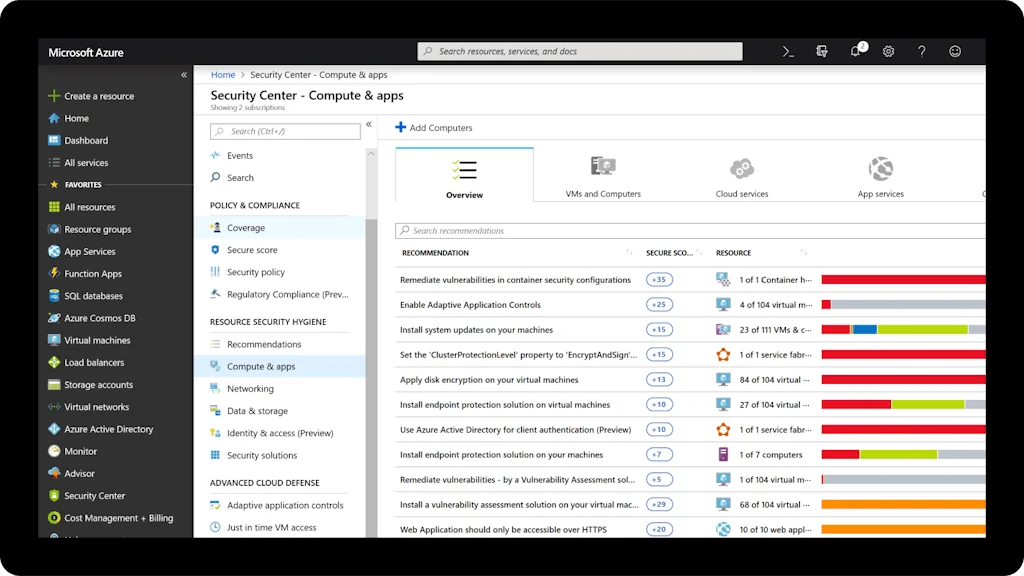

What is Microsoft Azure?
Optimize your costs by developing in the cloud. Invent with purpose.
Pros & Cons
Pros
- Reliable cloud infrastructure
- Advanced speech technology
- OpenAI integration
- Scalable AI integration
- Built-in security features
- Cost optimization
- Enterprise integration
- Global data center distribution
- Managed app services
- Microsoft for Startups program
- Text-to-speech services
- Azure Active Directory
- Azure Form Recognizer
- Document and text processing tools
- Fast instance spin time
- Free Azure credits
- GPU clusters for TTS
- Hybrid cloud capabilities
- Mature MLops ecosystem
- User-friendly interface
Tool Details
| Categories | Cloud Computing Platforms |
|---|---|
| Website | azure.microsoft.com |
| Added | July 14, 2014 |
| Platforms | Web |
| Social | Twitter · Instagram · Facebook · GitHub |
Recent Reviews (4)
At "We Are Learning," Microsoft Azure serves as the linchpin of our hosting infrastructure, providing a robust, secure, and scalable environment for both our front-end and back-end services. Leveraging Azure's managed app services has allowed us to focus on feature development and innovation, rather than being bogged down by infrastructure management. The platform's built-in security features, including data encryption and Azure Active Directory, align well with our commitment to data protection and regulatory compliance. Its global reach and data center distribution have been invaluable in reducing latency, thereby enhancing user experience for our globally diverse customer base. Overall, Azure's comprehensive suite of cloud services has been pivotal in achieving operational excellence, enabling us to scale seamlessly across markets and industries.
Microsoft Azure’s server power is extremely helpful for TTS training—providing on‑demand, pay‑as‑you‑go GPU clusters, end‑to‑end TTS services, and a mature MLops ecosystem. Whether you’re experimenting with a small custom voice or training a production‑scale neural TTS model, Azure’s flexible compute and integrated tooling can dramatically shorten your development cycle and improve model quality.
Things can be said about the platform itself, but the team at Microsoft are absolutely world class!
It meets the needs of our SaaS product well
Frequently Asked Questions about Microsoft Azure
When did Microsoft Azure become popular?
Microsoft Azure became popular around July 14, 2014.
What are the main advantages of using Microsoft Azure?
The top advantages of Microsoft Azure include: reliable cloud infrastructure, advanced speech technology, OpenAI integration, scalable AI integration, built-in security features.
What is Microsoft Azure's overall user rating?
Microsoft Azure has an overall rating of 5.0/5 based on 32 user reviews.
What type of tool is Microsoft Azure?
Microsoft Azure belongs to the following categories: Cloud Computing Platforms.
Related Cloud Computing Platforms Tools

AWS
AWS offers reliable, scalable, and inexpensive cloud.

Bublup
The easy way to save, organize, and share…

Smart Invoices
The First AI-Powered Invoicing Assistant

Spell
Streamline Machine Learning.

bunny.net
The simple way to deliver, secure, and build on the web

StackBlitz
StackBlitz is an instant fullstack web IDE for the JavaScript ecosystem.
Compare Microsoft Azure :




Don't Get Fooled by Fake Social Media Videos
The world's first fact checker for social media. Paste any link and get an instant credibility score with sources.
Try FactCheckTool Free