

Next.js
Create web applications with the power of React components
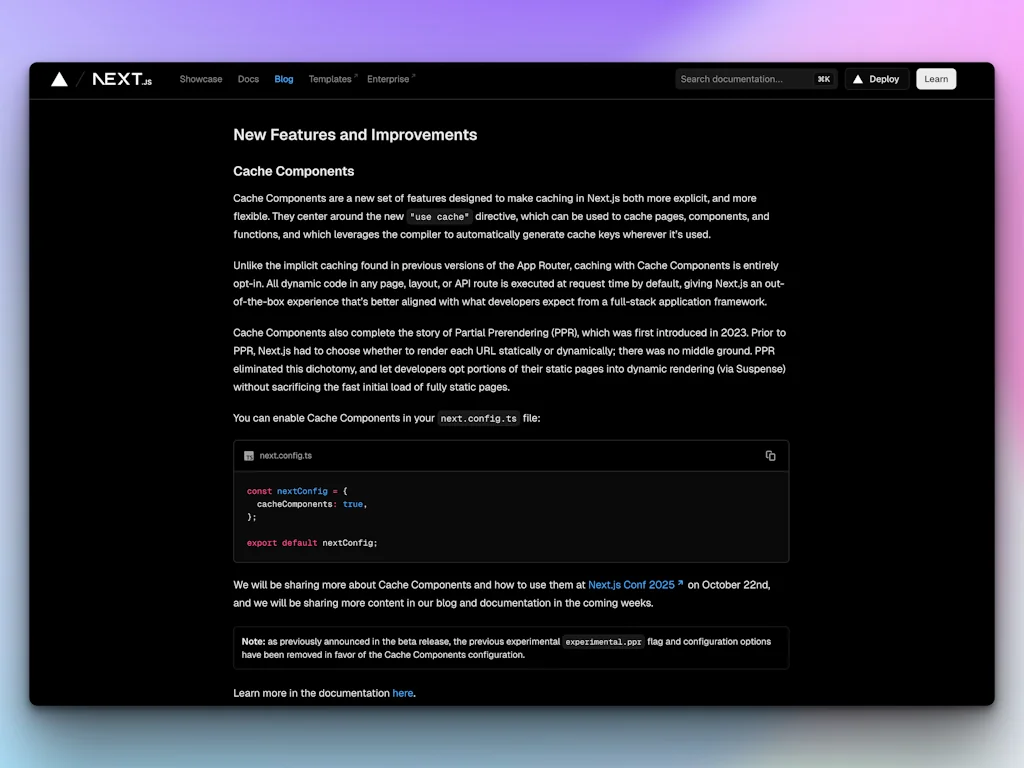
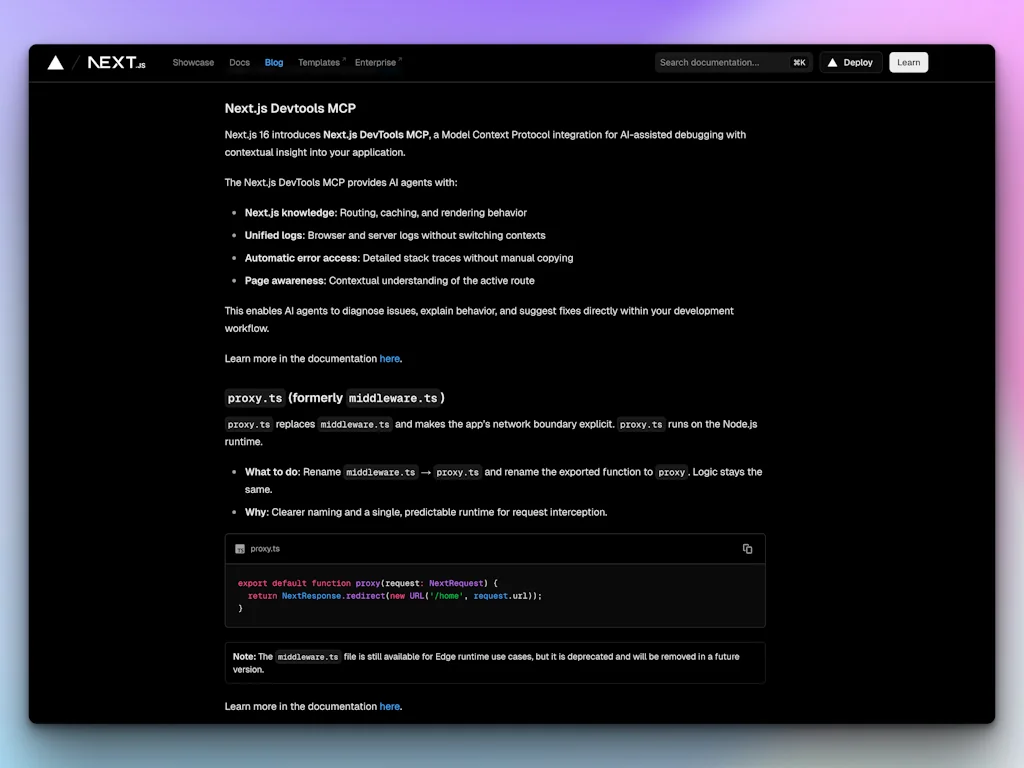
What is Next.js?
The React framework for production. Next.js provides zero-configuration automatic code splitting, filesystem based routing, hot code reloading and universal rendering.
Pros & Cons
Pros
- Fast performance
- Server-side rendering
- Developer experience
- Static site generation
- SEO optimization
- React integration
- Scalability
- API routes
- File-based routing
- TypeScript support
- Built-in optimizations
- Automatic code splitting
- App router
- Universal rendering
- Vercel integration
- Hot code reloading
- Edge deployment
Cons
- Caching issues
- Learning curve
- Stability issues
- Configuration complexity
- Performance anxiety
Tool Details
| Categories | Engineering & Development, Static site generators, UI frameworks |
|---|---|
| Website | nextjs.org |
| Added | February 11, 2019 |
| Platforms | Web |
| Social | Twitter · GitHub |
Recent Reviews (13)
In "We Are Learning," we've found Next.js to be an invaluable asset for front-end development, particularly because of its server-side rendering capabilities, which dramatically boost both SEO and user experience through faster load times. Its automatic code splitting and file-based routing have simplified our development workflow, allowing us to focus on feature development rather than boilerplate code. The built-in API routes and extensible architecture have made it straightforward for us to integrate various data sources and backend services, aligning well with our diverse training modules. Its robustness and scalability easily meet our enterprise-level requirements, contributing significantly to our platform's reliability and performance. Overall, Next.js has been a cornerstone in accelerating our development cycles, without any trade-offs in quality.
For all the developers checking this out, I wanted to share a bit about the tech stack. Noxionite is built with Next.js, and it was the perfect choice for this project. The goal was to make Notion-powered blogs feel as fast as a static site, and Next.js's Incremental Static Regeneration (ISR) was the key. Pages are pre-rendered at build time for instant loads, but they also pull updates from Notion in the background every 60 seconds. This gives you the best of both worlds: incredible performance and near real-time content updates. The core rendering is powered by the amazing react-notion-x library. The entire project is open-source under the MIT license. So if you're curious about a real-world example of using Next.js with Notion as a headless CMS, feel free to dive into the code on GitHub! I'm happy to answer any technical questions you might have.
We love Next.js for its seamless blend of React and server‑side rendering. It’s faster, SEO‑friendly by design, and offers an outstanding developer experience with minimal setup. Next.js just gets us to production quicker—no heavy config required. Alternatives Considered: Create React App: Good for basic setups but lacks built‑in SSR. Gatsby: Great for static sites, but not as straightforward for dynamic or large‑scale needs. Remix: Promising features, but Next.js had the more mature ecosystem when we started.
I’ve built both my website and a full web app on top of Next.js, and it’s been such a smooth experience. The framework handles routing, APIs, and performance optimizations out of the box, so I can just focus on the actual product instead of wrestling with setup. It scales nicely too — works just as well for simple landing pages as it does for complex dashboards. What makes it even better is pairing it with AI tools like ChatGPT and Claude. They’re really good at helping with Next.js-specific code, whether it’s debugging an App Router issue or generating boilerplate. That combo makes building with Next.js feel faster and way less stressful. 🚀
I chose Next.js because it gives the perfect balance of performance, developer experience, and flexibility. Features like file-based routing, API routes, and built-in optimizations make it incredibly easy to build production-ready apps. I also appreciate the strong community, great documentation, and the fact that it scales well for startups and personal projects. Compared to other tools, Next.js feels faster to build with and more reliable for real-world deployments.
Next.js is a strong default for React apps: great DX, file-system routing, server components/Server Actions for fast data fetching, and built-in image/font optimization. Vercel hosting makes deploys trivial, but you can host anywhere. Could be better: App Router + RSC still have sharp edges (caching, server/client boundaries, hydration quirks), build times can creep, and debugging Server Actions isn’t fun. Watch for Vercel-specific patterns if you want to avoid lock-in. Compared: Next.js = ecosystem + hiring pool. Remix feels cleaner for forms/mutations; SvelteKit can ship leaner bundles. Verdict: Use Next for most production React work—stick to stable features and add RSC cautiously.
Next.js has been central to the growth of Rubix Studios. As an agency focused on high-performance websites, we needed a framework that was flexible, reliable, and easy for developers to work with. Next.js delivered on all of these needs. The mix of server-side rendering and static site generation gives our projects fast load times, strong search visibility, and effortless scalability for both local and global clients. File-based routing, API routes, and hot reloading speed up development and make the workflow enjoyable for the team. We have tried many frameworks, but none match Next.js for prototyping speed and production stability. The developer experience is smooth, documentation is clear, and the community is active and supportive. TypeScript support and its seamless fit with React made it a natural choice for our stack. For agencies, startups, or solo developers wanting a framework for modern web apps, Next.js offers the right mix of speed, scalability, and developer experience. It is at the core of how we build at Rubix Studios and continues to set the benchmark for what is possible on the web.
Next.js is the future of web development because it has features that help make building websites easier and faster. I'm in love personally as I am a full stack developer with more weight on backend. It being built on React, a popular JavasScript library, and offering server-side rendering as well as client side rendering makes it a modern monolith, which made me enjoy the weaker side of my full stack label - frontend. With easy-to-use CSS support. (Tailwind seamless integration) simple routing, and a strong community, Next.js is set to lead the way in creating better, more efficient web applications.
Next.js is a powerful React framework that simplifies building modern web applications. It offers built-in features like server-side rendering (SSR), static site generation (SSG), API routes, and image optimization, making it ideal for both performance and SEO. The developer experience is excellent, with intuitive routing and great TypeScript support. Overall, it's a great choice for scalable, production-ready apps.
Next.js is a powerhouse for modern web development! With its seamless server-side rendering, static site generation, and optimized performance, it makes building fast, scalable apps effortless. The developer experience is smooth, and the built-in features like API routes and image optimization are game-changers. A must-have for React developers!
I’ve been using Next.js lately and I really like how the App Router is set up. The way it handles routing feels super clean, and the built-in caching makes everything feel faster without me needing to overthink it. It’s nice not having to stitch together a bunch of separate tools just to get those features.
Next.js is a fantastic framework for designers who want to code! With its intuitive file-based routing, fast refresh, and seamless integration with React, you can instantly visualize UI changes while building. Perfect for prototyping or creating production-ready sites without deep backend knowledge.
Great React framework if you want to build fast, scalable web apps. Saves a lot of setup time. The developer experience is smooth, and the documentation is top-notch. On the flip side, it does have a bit of a learning curve if you're new to full-stack development or SSR concepts.
Frequently Asked Questions about Next.js
When did Next.js become popular?
Next.js became popular around February 11, 2019.
What are the main advantages of using Next.js?
The top advantages of Next.js include: fast performance, server-side rendering, developer experience, static site generation, SEO optimization.
What are the disadvantages of Next.js?
Some reported disadvantages of Next.js include: caching issues, learning curve, stability issues, configuration complexity, performance anxiety.
What is Next.js's overall user rating?
Next.js has an overall rating of 5.0/5 based on 436 user reviews.
What type of tool is Next.js?
Next.js belongs to the following categories: Engineering & Development, Static site generators, UI frameworks.
Related Engineering & Development Tools

SnippetEase
Free Code Snippet Generator for Bloggers

Updatest
Your new home for Mac updates.

Hypertune
Type-safe feature flags. Optimized for React and Next.js.

Parallel DOM
Make your apps faster, parallelize away heavy DOM operations

Hack Club
Learn how to start a coding club at your high school

Links 2.0
All your links, beautifully organized with Links!
Related Static site generators Tools

How to professionally say
A guide for your daily "professional" interactions

GetaResume
Create a stunning resume portfolio in seconds, not hours.

Realmac Software
We are Realmac Software. We make nice things.

Up
Deploy serverless apps and APIs in seconds to AWS Lambda

UiWidgets
Ship Landing pages & SaaS at lightning speed.

Start List
Validate your business ideas in days not months
Related UI frameworks Tools

Flow
Import Sketch or Figma. Animate your heart out.

Screen Size Map
An interactive map of screen sizes for responsive web design

Anomaly
Subscription-based design studio for early stage founders.

Retro UI
A React based component library, designed to stand out.

DynaUI
UI Library for Developers
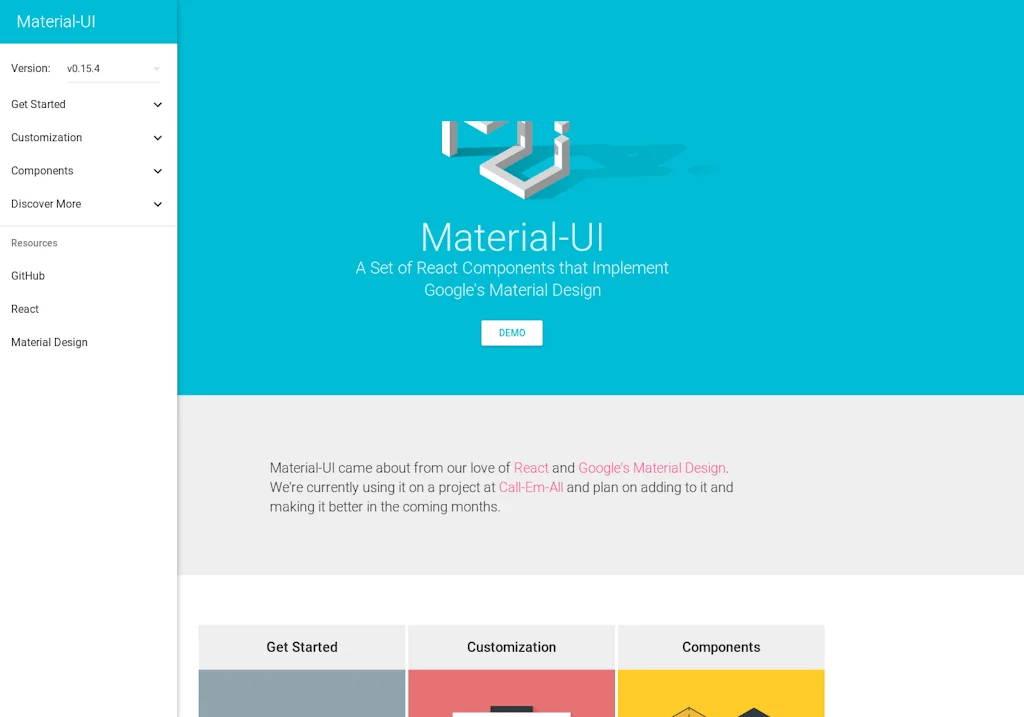
Material UI
A CSS Framework that Implements Google's Material Design
Compare Next.js :





Don't Get Fooled by Fake Social Media Videos
The world's first fact checker for social media. Paste any link and get an instant credibility score with sources.
Try FactCheckTool Free